Proving attendance for accredited education: registration and check-in for CPD and PE points
To prove attendance for continuing education points, collect each participant's professional registration number when they sign up, and check every person in at the door. Then apply your accrediting body's rules on late arrivals and early leavers, and submit the attendance list in the format the body asks for.
- 6 points
- From ABAN for NASKHO's two-day symposium in June 2026
- 60 days
- KNMG's limit to enter a presence list in GAIA
- 1 event
- Per course day, so each day has its own record

In this guide
Know what your accrediting body asks for
This guide is for accredited courses, symposia and nascholing (Dutch for continuing professional education) on the islands. It is general information, not advice on your accrediting body's rules.
Rules differ per profession and per accrediting body. Whether island rules, Dutch rules or both apply also differs per profession. Some examples from the region:
- Medical education. NASKHO, the Dutch Caribbean Foundation for Clinical Higher Education, runs accredited symposia on Curaçao . Its event page lists 6 points from ABAN, the Dutch accreditation office for general continuing education, for the "Quality of Care 2026" symposium on 19 and 20 June 2026: 2 points on day one and 4 on day two . In the Dutch GAIA system, the provider enters the presence list, and points then appear in each participant's file, as an NVOG note from 2019 describes it . KNMG's general conditions block providers that have not entered the list after 60 days . Check the current conditions with KNMG.
- Accountants. The Dutch Caribbean Accountants Association (DCAA) and the Dutch NBA run a yearly congress on Curaçao, usually in November . Dutch accountants document their permanent education in a yearly portfolio . Ask DCAA whether and how this applies to accountants on the islands.
- Lawyers. The Orde van Advocaten in Curaçao has rules on professional competence . Ask the Orde for its current requirements.
Ask your accrediting body before you open registration
- Which identifier do you need for each participant? For example a BIG number or member number. You must collect it at registration.
- Do you need a signature, or is a digital check-in record enough? This decides whether you also need a paper list.
- Must people attend the full session to earn points? This decides how you handle late arrivals and early leavers.
- Are points given per day or per part? This decides how you set up courses over more than one day.
- How and by when must you submit the list? Upload, form or file, and the deadline.
- How long must you keep the records? This sets your storage plan.
Collect the right data at registration

Ask for what your accrediting body needs, and nothing more. You are storing professional data, so keep it lean.
- Full name as it appears in the professional register. So the name matches the register when you submit.
- Email. Where the ticket goes.
- Professional registration number. A short text question, required. You need it to register points.
- Profession or specialty. A dropdown. Some bodies accredit per profession.
- Organization. A short text question, for your own records.
- Consent. A required yes or no question: "I agree that my attendance is shared with" your accrediting body. This is your consent to pass the data on.
Make the registration number a required question, so nobody registers without it.
Check in with records that hold up
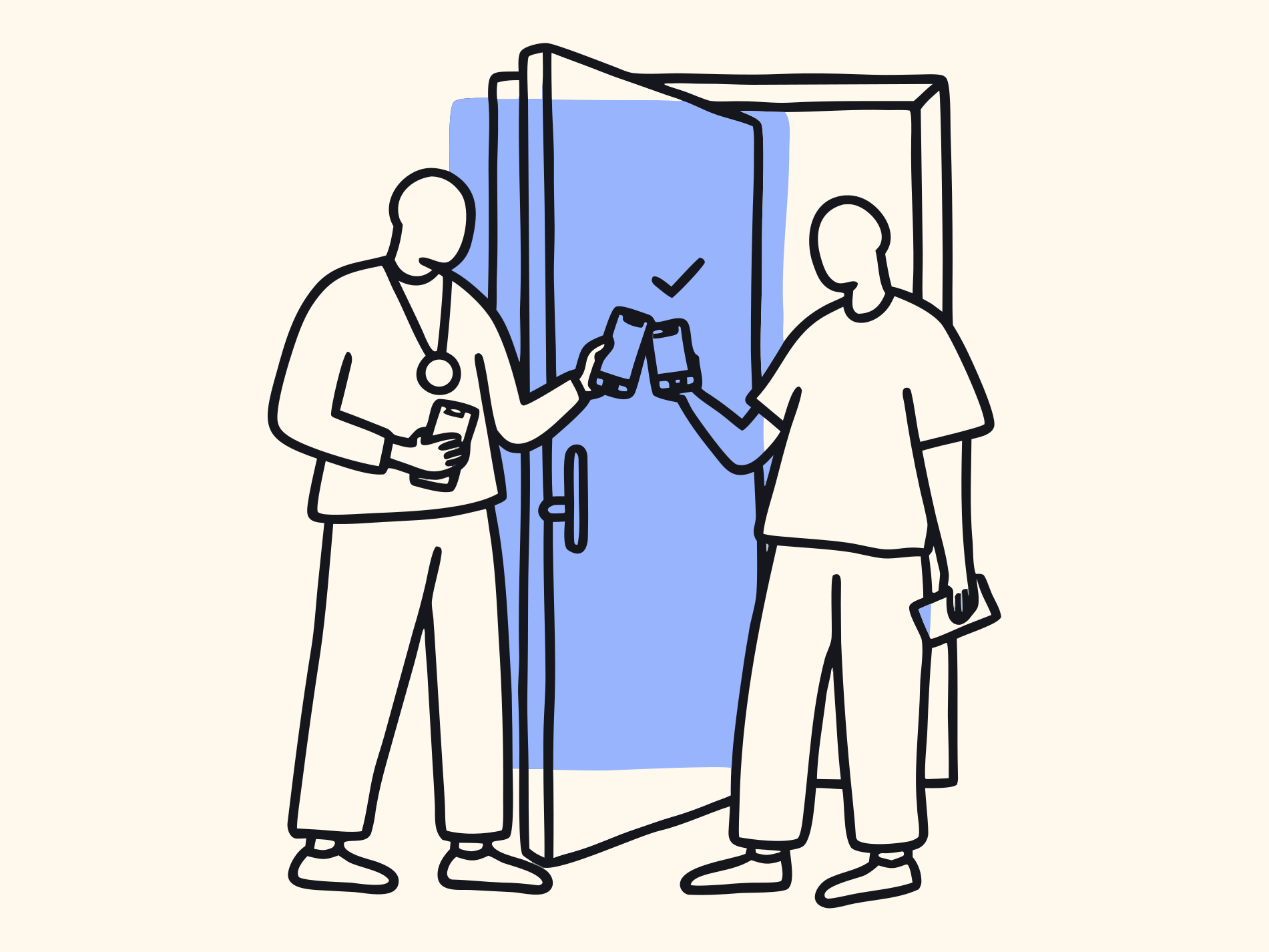
At the door, staff check people in on their phones, by scanning the QR code on the ticket or by looking people up by name or ticket number. You can run as many check-in stations as you need.
- Who is inside. Your dashboard shows arrivals as they happen, per minute and per station. Each check-in is stored with its time, the station and how the person was checked in, and all of it is in the CSV export.
- Walk-ins. Someone who never registered is added at the door and counted like everyone else. Brief staff to write down the registration number of every walk-in, so you can add it to your list after the course.
- Mistakes. A wrong check-in is undone on the device, and that ticket works at the door again.
- No signal. If the venue wifi drops, scans queue on the phone. Staff see how many are queued, so they know the device is behind and by how much.
Late arrivals and early leavers
Mi Karchi records people as they arrive. It does not record when they leave.
- Late arrivals. Agree on a cut-off time with your accrediting body, such as 15 minutes after the start. The CSV export shows each person's check-in time, so sort by it after the session: anyone checked in after the cut-off came late.
- Early leavers. If your body requires proof that people stayed, print the attendee list and ask for a signature at the end of the session. Keep the signed list with your export.
If you need check-out records, tell us.
Courses over more than one day
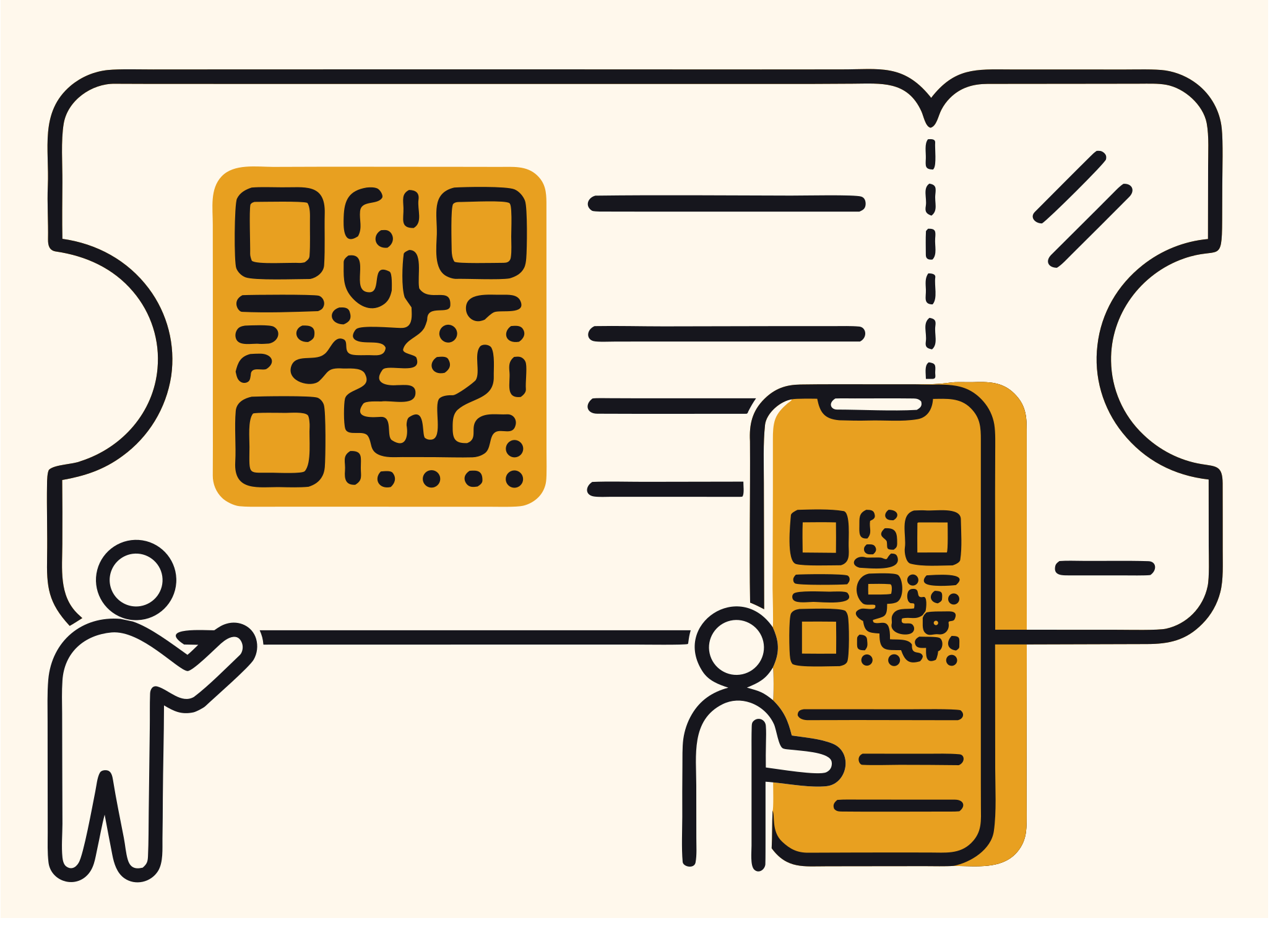
Some bodies award points per day, as in the NASKHO example above . Set up each day as its own event, so each day has its own attendance record. Participants then register for each day. If you need one registration for a course over more than one day, tell us.
Export and submit
After the session:
- Export the attendee list to CSV. It holds every registration answer and each person's check-in time, station and method.
- Keep only people who checked in, and apply your late-arrival rule by check-in time.
- Put the columns in the order your accrediting body asks for.
- Submit before the deadline, and note the date you submitted.
Certificates. Mi Karchi does not issue certificates. Use the attendance export as the source for your certificate mail merge, so only people who attended get one. If you need certificates built in, tell us.
Keep records safely
- Store the export and any signed lists in one place with restricted access.
- Do not send attendance lists around by email.
- Delete the data when the retention period ends.
- Ask a legal adviser what Curaçao's personal data protection law requires for storing professional registration numbers. Mi Karchi keeps event data in the United States, so mention that when you ask.
Checklist
Tick these off as you go. Your ticks stay in this browser, so you can come back to the list.
Your ticks stay on this device only.
Before registration opens
On the day
After the course
Questions people ask
Search the answers, or open one.
6 questions
It depends on your accrediting body. Mi Karchi records each check-in with its time, station and method, and exports it to CSV. Some bodies also want a signature. Ask yours.
More on Mi Karchi
Sources
Checked on 15 November 2026. Where a source covers an earlier year, the guide says so next to the date.
- 1.NASKHO, About NASKHO. naskho.org/index.php/en/about-us/over-naskho
- 2.NASKHO, Quality of Care 2026 (2026). naskho.org/index.php/en/conferences/event/568-quality-of-care-2026
- 3.KNMG, General conditions for accreditation. knmg.nl/download/algemene-voorwaarden-voor-accreditatie
- 4.NVOG, Accreditation note (2019). nvog.nl/wp-content/uploads/2022/08/Accreditatie-26-11-2019.pdf
- 5.Accountant.nl, Kris Douma at the accountants congress in Curaçao (2022). accountant.nl/nieuws/2022/11/kris-douma-bij-accountantscongres-curacao-over-toekomstbestendigheid/
- 6.Accountancy van Morgen, Permanent education today (2022). accountancyvanmorgen.nl/2022/04/04/lifestyle-en-carriere-permanente-educatie-anno-nu-meer-zelfdiscipline-nodig/
- 7.Orde van Advocaten Curaçao, Plans for 2009 (2009). curacao-law.com/wp-content/uploads/2009/02/plannen-ordejaar-2009.pdf
Run your accredited courses with Mi Karchi
Mi Karchi handles registration with your own questions, capacity and a waitlist, QR tickets, check-in by QR or by name on as many phones as you need, walk-ins and a CSV export of your attendee list. We set it up with you.
Sell seats with ticket types, each with its own price and number of places, in guilders or dollars. Participants pay through Sentoo from their own bank, or by card. After the course you get one statement and one payout. Ask us for a quote.
Talk to us about selling tickets Running a free lectureWe set up free registration and check-in too. Ask us for a quote.
Tell us about your free lecture